Planning LEGOLAND Florida with a toddler is not the same as planning it with a pre-teen. A toddler needs short stops, shade, snacks, simple rides, and time to reset. A pre-teen needs choices, challenges, bigger ride goals, and a little independence.
This guide gives parents a practical way to build the day around those differences. It also covers the hard part many families run into: what to do when one child is 2 and another is 10, and both deserve a trip that feels like it was made for them.
In This Guide
- How toddler and pre-teen needs differ at LEGOLAND Florida
- A sample toddler itinerary for ages 1-3
- A sample pre-teen itinerary for ages 9-12
- A mixed-age family plan when siblings are far apart in age
- How to manage fairness, jealousy, waiting, and parent splitting
- What to check for safety, height, naps, food, and weather
The Big Shift: Toddlers Need Sensory Wins, Pre-Teens Need Ownership
The biggest mistake is planning one day and expecting both ages to enjoy it the same way. Toddlers and pre-teens are not looking for the same kind of fun.
A toddler is learning through touch, sound, color, motion, copying, and repeated simple routines. They may enjoy the same small ride twice because the second time feels safer. They may also melt down after a loud queue, a missed snack, or a transition they did not understand.
A pre-teen wants to feel capable. They may want to handle a bigger ride, beat a score, read the map, build something better, trade Minifigures, or choose the next land. They can still enjoy LEGO characters and family moments, but they usually do not want the whole day to feel built around the youngest child.
Toddlers ages 1-3
Best rhythm: short, predictable, sensory, shaded, close to bathrooms and stroller parking.
Parent goal: prevent overload before it becomes a meltdown.
Good signs: pointing, laughing, clapping, repeating a word, wanting to ride again, relaxed body language.
Pre-teens ages 9-12
Best rhythm: choice-based, challenge-based, social, skill-building, and less babied.
Parent goal: give independence inside clear boundaries.
Good signs: checking the app or map, asking for a goal, comparing scores, helping a sibling, choosing the next land.
Before You Pick Rides, Pick Your Family Strategy
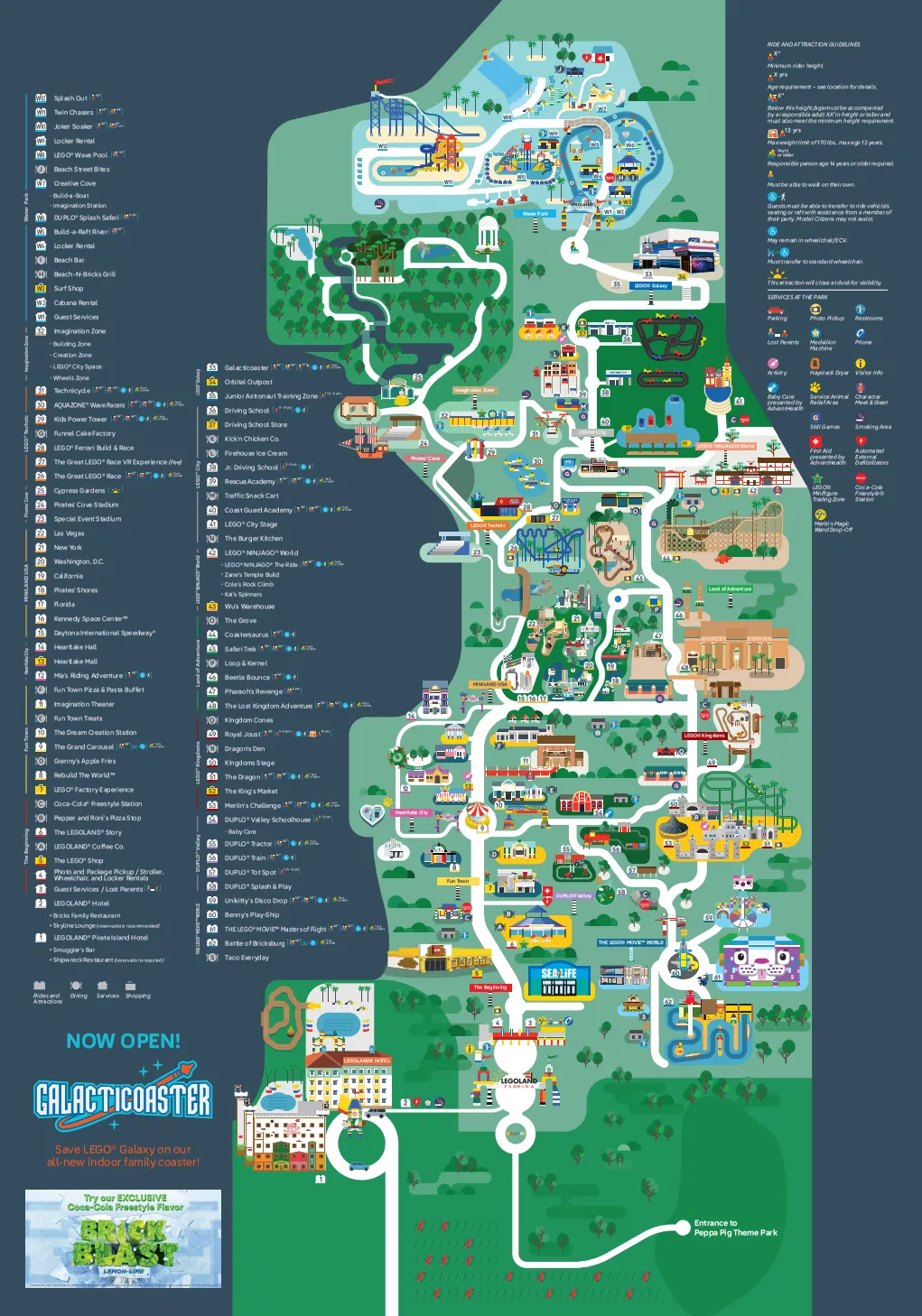
LEGOLAND Florida is designed around kids, but that does not mean every ride fits every kid. The official park guidance says the resort is built for kids ages 2-12, and height requirements still matter. Start with our LEGOLAND Florida height requirements guide, then confirm the latest official rules before your visit. This matters most if your toddler is close to a cutoff or your pre-teen wants coasters, water rides, or bigger indoor attractions.
| Planning Choice | Best For Toddlers | Best For Pre-Teens | Parent Move |
|---|---|---|---|
| First hour | Gentle rides, DUPLO Valley, stroller-friendly movement | A bigger first win like a coaster, NINJAGO, Driving School, or a build challenge | Arrive with one toddler anchor and one pre-teen anchor already chosen |
| Lines | Short waits, snacks, shade, simple expectations | Waits are easier if there is a reason, challenge, or payoff | Use the app, map, and nearby alternatives instead of forcing long toddler waits |
| Rest | Real rest before the crash, not after | Food, shade, screens for a short reset, or independent map planning | Schedule a midday reset even if everyone says they are fine |
| Decision making | Two safe choices: train or carousel, snack or water | Real choices: next land, ride order, score challenge, photo stop | Give each child ownership that matches their age |
| End of day | Leave while the toddler still has some battery left | One final big-kid ride, build, or shop look | Plan the exit before the toddler is done for the day |
Practical Ride, Show, and Land Picks by Age
Use this as a practical park-day list. It is not a promise that every attraction will be open or right for every child. Check the app, posted signs, and your child’s comfort level before getting in line.
| Park Area or Attraction | Better Toddler Use | Better Pre-Teen Use | Parent Tip |
|---|---|---|---|
| DUPLO Valley, DUPLO Train, DUPLO Tractor, DUPLO Tot Spot, and DUPLO Valley Schoolhouse | Best early-day anchor for little kids who need simple rides and soft play | Usually a sibling-support stop, not the main event | Pair it with a promised pre-teen pick right after so the older child knows their turn is coming |
| Junior Astronaut Training Zone and Galacticoaster in LEGO Galaxy | Junior Astronaut Training Zone gives younger kids a space-themed play stop | Galacticoaster gives older kids a bigger ride goal if they meet the rule | Use LEGO Galaxy as a split-area plan: little kid play plus older kid ride |
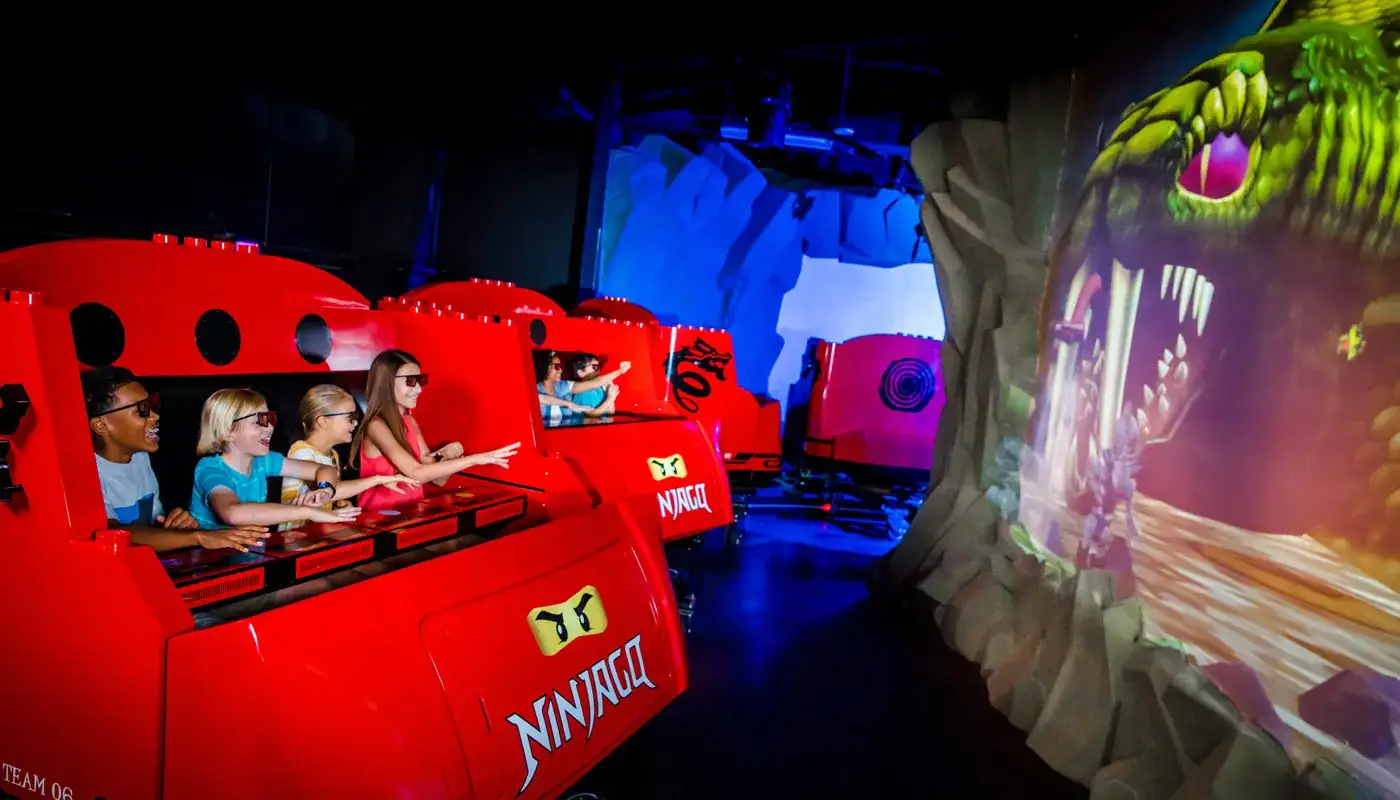
| LEGO NINJAGO The Ride and LEGO NINJAGO World | Some toddlers may like watching the land, but the ride can be a lot | Strong pre-teen choice because it has motion, scoring, and skill | Let the pre-teen set a score goal or challenge a parent |
| Driving School, Coast Guard Academy, Rescue Academy, and LEGO City | Jr. Driving School fits ages 3-5, not younger toddlers | Driving School and team-style rides feel more independent | Use this area when the older child wants to do something that feels like a real job |
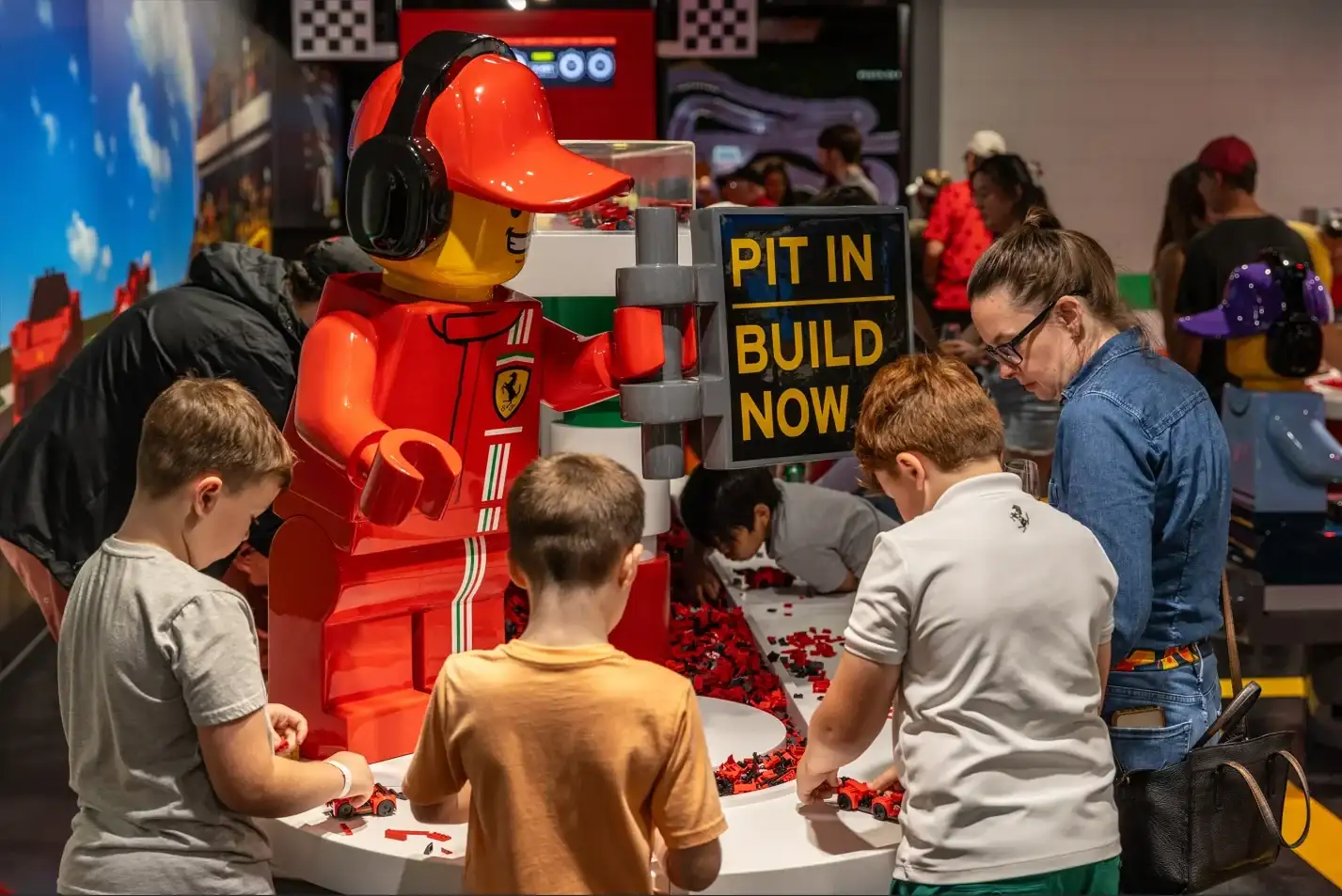
| LEGO Ferrari Build & Race and Imagination Zone | Good for short building if the toddler is calm and supervised | Great for design, testing, racing, and problem solving | This is a strong heat or rain backup that still feels useful for older kids |
| The Dragon, The Great LEGO Race, Technicycle, AQUAZONE Wave Racers, and Mia’s Riding Adventure | Usually not toddler-focused | Better for pre-teens who want thrill, height, speed, or control | Check height rules first and give younger siblings a nearby snack, stroller, or play plan |
| Pirate River Quest, MINILAND USA, The Grand Carousel, and Cypress Gardens | Good slower options when the toddler needs a lower-pressure pace | Works if framed as a search game, photo mission, or family reset | Use these when the family needs to reconnect after splitting up |
| 4D shows, meet-and-greets, Pop Badge collecting, and Minifigure Trading | Shows can be a cool-down if your toddler handles sound and darkness | Trading, badges, and 4D shows give older kids a goal between rides | Check showtimes in the app and avoid forcing character photos if either child is unsure |
Toddler Itinerary: Ages 1-3
For toddlers, the best LEGOLAND Florida day is not about doing the most. It is about keeping the child regulated enough to enjoy the park. That means starting gentle, keeping food and water ahead of the mood, and using indoor or shaded breaks before the afternoon heat does the parenting for you.
Morning: Start With Familiar, Low-Pressure Movement
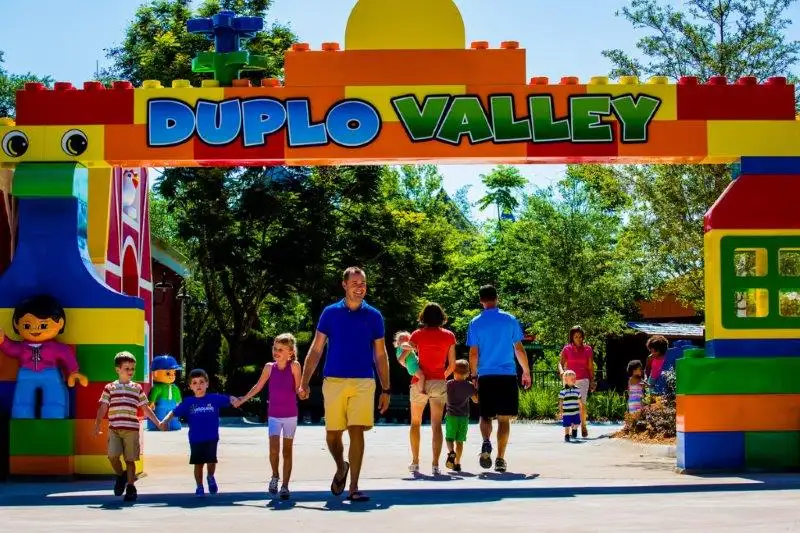
Begin with toddler-friendly areas and rides where the experience is easy to understand. DUPLO Valley is the natural anchor because it gives little kids bright colors, slower movement, and spaces that feel made for their size. The official DUPLO Valley Schoolhouse page also notes indoor soft-play activities and a Baby Care Center with changing and nursing stations, a microwave, fridge, and rocking chairs.
- Start with DUPLO Valley before your toddler is tired.
- Choose one or two gentle rides, then pause. Do not stack four rides in a row just because the waits are short.
- Use simple preview language: “First train, then snack,” or “First play, then stroller.”
- Let your toddler repeat a safe favorite if the day is going well. Repetition is not wasted time for this age.
Good toddler-friendly targets include DUPLO Train, DUPLO Tractor, DUPLO Tot Spot, DUPLO Valley Schoolhouse, The Grand Carousel, gentle walks through MINILAND USA, and short indoor breaks when the heat builds. If your toddler is closer to age 3, Jr. Driving School may become an option, but it is not for ages 1-2.

Late Morning: Add One Stretch Activity, Then Reset
After the first easy wins, add one slightly bigger experience if your toddler is still regulated. This might be a family ride with no intimidating build-up, a shaded walk through a detailed LEGO area, or an indoor play break. The goal is not bravery. The goal is a small stretch without tipping into overload.
Watch the body, not the words. A toddler who says “again” while rubbing eyes, grabbing at a parent, or refusing water may still need a break. Hunger, heat, and noise often show up as behavior before a toddler can explain the problem.
Lunch: Eat Earlier Than Adults Want To
For ages 1-3, lunch is not just a meal. It is a regulation tool. Eat before peak hunger, avoid waiting until everyone is cranky, and use the stroller as a calm base if the dining area is busy. If your toddler naps, decide before arrival whether the nap will happen in a stroller, at the hotel, in the car, or back at your lodging.
Afternoon: Choose Calm Over Completion
After lunch, pick one more toddler-friendly experience, not a second full park day. Florida heat, missed naps, and extra stimulation can make the afternoon harder than the morning. If your toddler has already had several happy moments, the day is working.
Pre-Teen Itinerary: Ages 9-12
Pre-teens usually need a different kind of plan. They can handle longer walks, more complex instructions, and bigger goals. They also notice when the whole day revolves around a younger sibling. Give them a job, a challenge, and a say in the plan.
Morning: Start With a Win That Feels Older
Let your pre-teen choose one priority from a parent-approved list. Good candidates include LEGO NINJAGO The Ride, The Dragon, Coastersaurus, Driving School-style experiences, Miniland exploration, or a LEGO build area. The right pick depends on your child, height rules, ride comfort, and current attraction operations.
- Ask: “Do you want your first pick to be a ride, a build, or a challenge?”
- Use the LEGOLAND Florida rides and attractions guide to build a short list before arrival.
- Let them read the map or app with you, but keep final safety decisions with the adult.
- If they like competition, set a score goal on interactive attractions or a photo scavenger hunt in Miniland.
Strong pre-teen targets include LEGO NINJAGO The Ride, Galacticoaster, LEGO Ferrari Build & Race, Driving School, The Dragon, The Great LEGO Race, Technicycle, AQUAZONE Wave Racers, Pirate River Quest, Minifigure Trading, and Pop Badge collecting. Mix one ride, one challenge, and one slower family stop instead of making the whole day a coaster chase.
Late Morning: Build Independence Without Losing Structure
A 9- to 12-year-old may be ready to order a snack with you nearby, lead the family to the next land, compare wait times, or choose between two attractions. That independence should be real, but bounded. The parent still sets the meeting spot, phone rules, spending limit, and ride safety rules.
Lunch: Give Them a Planning Role
Lunch is a good time to let a pre-teen feel older without creating chaos. Ask them to choose the next two priorities, check the map, or decide whether the family should do a ride, a build, or a cooler indoor stop after eating. This helps them feel included instead of dragged through a toddler schedule.
Afternoon: Save One Strong Pre-Teen Moment
Do not spend all the pre-teen energy in the first two hours. Save one bigger moment for later: a coaster if they meet the requirements, an interactive ride, a build challenge, a return to a favorite land, or time to browse LEGO sets with a clear budget. That final choice can make the whole day feel fair, even if the family spent plenty of time on toddler needs.

Side-by-Side Sample Day Plans
Use these as starting points, not strict schedules. Check the official app, current park hours, show times, attraction operations, height rules, and weather before locking in your day.
| Time | Toddler Plan | Pre-Teen Plan | Mixed-Age Family Adjustment |
|---|---|---|---|
| Arrival | Bathroom, sunscreen, stroller setup, one simple promise | Pick first priority from a short list | Give the pre-teen the map job while toddler gets settled |
| First hour | DUPLO Valley, gentle ride, short play stop | NINJAGO, coaster, Driving School, or build challenge | Split adults if possible; if not, do one toddler win then one pre-teen win |
| Late morning | Snack, indoor break, stroller reset | Second choice or score challenge | Use a snack stop as the handoff point between age priorities |
| Lunch | Eat early, avoid waiting for hunger cues | Review map and choose afternoon options | Let the older child help pick the after-lunch plan from two parent-approved choices |
| Early afternoon | Nap, shade, Baby Care Center, carousel, MINILAND, or exit | Galacticoaster, NINJAGO, Ferrari Build & Race, The Dragon, or The Great LEGO Race | One adult handles toddler rest while the other gives the pre-teen a focused block |
| Final hour | Repeat favorite or leave calmly | Final favorite, photo, or LEGO store look | End with a shared photo or small ritual so the day feels connected |
Managing Sibling Dynamics When You Have Both Age Groups
This is the section that can save the day. The toddler is not trying to ruin the pre-teen’s fun. The pre-teen is not being selfish for wanting something bigger. They have different needs, and parents need to name that clearly.
Say the Fairness Rule Before You Enter the Park
Fair does not mean every child does the same thing. Fair means each child gets needs met and gets some choices that fit their age. Explain this before the first line, not during the first conflict.
Give the Pre-Teen Status, Not Babysitting
It is fine to let an older child help, but do not turn the trip into a childcare job. A pre-teen can be the map captain, photo captain, scorekeeper, or snack-budget helper. Those roles give status without making them responsible for a toddler’s mood.
Use Planned Splits, Not Emergency Splits
If two adults are available, plan one or two short splits on purpose. One adult takes the toddler to a calm space, stroller walk, or DUPLO activity. The other gives the pre-teen a focused ride or challenge block. Planned splits feel fair. Emergency splits often feel like someone lost.
Give the Toddler a Transition Object
When the older child gets a big-kid turn, give the toddler something concrete to do: snack cup, small toy, stroller fan, sticker, or a simple “find the red bricks” game. Toddlers wait better when waiting has a job.
Protect One Shared Moment
A mixed-age day should still feel like a family day. Choose one shared moment that works for both kids: a family photo, Miniland search game, gentle ride everyone can do, build activity, snack break, or end-of-day shop look. This gives the siblings a memory together instead of two separate trips happening in the same park.
What Toddlers and Pre-Teens Can Usually Enjoy Together
Not every shared activity has to be a ride. In fact, the best cross-age activities often have flexible participation. A toddler can look, point, clap, or copy. A pre-teen can search, compete, explain, photograph, or lead.
| Shared Activity Type | Why It Works for Toddlers | Why It Works for Pre-Teens | How Parents Can Frame It |
|---|---|---|---|
| Miniland-style exploring | Lots to point at, easy to stop and move on | Scavenger hunt, details, photos, landmarks | Give the older child a list of things to find while the toddler points out colors |
| Gentle family rides | Short, predictable, close to a parent | Low stakes, good family photo or rest moment | Make it a family reset, not the main pre-teen thrill |
| LEGO building | Touch, stack, sort, copy | Design, speed challenge, creativity, problem solving | Give separate goals: toddler stacks, pre-teen builds a bridge or vehicle |
| Character or themed moments | Visual and simple if not too loud | Fun if framed as photo, joke, or sibling memory | Do not force hugs or photos; let each child choose their comfort level |
| Snack breaks | Regulation and routine | Choice, budget practice, shade | Use snacks as a planned reset, not a bribe after things fall apart |
Safety, Height, and Comfort Checks Parents Should Make
Before promising any ride, check our LEGOLAND Florida height requirements guide and the current official attraction rules. Some rides have minimum heights, some require a supervising companion under a certain height, and some experiences may be too loud, dark, wet, or fast for a particular child even when they technically qualify.
- Measure children in the shoes they will wear to the park, but do not coach them to stretch past a requirement.
- Tell pre-teens that height and restraint rules are safety rules, not parent opinions.
- For toddlers, consider noise, darkness, lap bars, separation from parent, heat, and wait length.
- Use the official LEGOLAND Florida mobile app for current ride times and map help inside the park.
- Check the LEGOLAND Florida crowd calendar before choosing your date if your family struggles with long waits.
Food, Naps, Heat, and Meltdown Prevention
Parents often plan the rides and forget the nervous system. For toddlers, the nervous system is the itinerary. For pre-teens, food and heat still matter, but they may show discomfort as attitude, sarcasm, or arguing instead of tears.
| Trigger | Toddler Sign | Pre-Teen Sign | Best Parent Response |
|---|---|---|---|
| Heat | Flushed face, floppy body, sudden crying, refusing stroller | Complaining, silence, rushing, headache, irritability | Shade, water, indoor stop, slower pace, cooling towel |
| Hunger | Grabbing, crying, refusing choices, asking for unrelated things | Snapping, indecision, low patience | Snack before the line, lunch earlier than usual |
| Noise | Covering ears, hiding, clinging | Withdrawing or saying something is annoying | Move away first, talk later; consider headphones for sensitive kids |
| Too many choices | Meltdown after being asked what they want | Arguing over every option | Offer two choices, both acceptable to the parent |
| Unfairness | Hard to understand; may copy sibling emotion | “We only do baby stuff” or “They always get their way” | Name the plan: toddler turn, pre-teen turn, shared turn |
What to Pack for Each Age Group
Packing for both ages does not mean packing the whole house. It means packing for the most likely pressure points: heat, snacks, boredom, wet clothes, transitions, and waiting.
Toddler Pack
- Stroller with shade
- Diapers or pull-ups, wipes, and change of clothes
- Small snacks and water
- Sun hat, sunscreen, and cooling towel
- Comfort item for stroller rest
- Small toy or sticker sheet for waits
- Swim diaper or water clothes if visiting water areas
Pre-Teen Pack
- Refillable water bottle
- Hat or sunglasses
- Small spending budget or gift card
- Phone or camera rules if they have a device
- Light drawstring bag if they can carry it comfortably
- Backup shirt for water rides or sweat
- A short priority list made before arrival
When the Water Park or Hotel Changes the Plan
If your tickets include the Water Park or your family is staying near the park, the age split becomes even more important. Water play can be wonderful for toddlers, but it adds changing, swim diapers, sunscreen, and safety supervision. Pre-teens may want bigger slides or more freedom in the water, which means parents should review rules and supervision expectations ahead of time.
If you are staying at a nearby LEGOLAND hotel, consider a midday room break for toddlers and a separate pre-teen reward later. The LEGOLAND Florida Hotel guide can help you decide whether staying close to the entrance is worth it for your family.
For water plans, review the LEGOLAND Water Park Florida guide and the current official attraction rules before promising slides or splash areas.
Parent Coaching Scripts for Common Park Problems
“You are right that this part is for your sibling. Your bigger kid choice is still on the plan. Help me get through this toddler stop, and then we are heading to your pick.”
“One more turn, then stroller snack. I will count it with you.” Keep the words short and the action calm.
“We are going toddler turn, pre-teen turn, family turn. Right now we are finishing toddler turn. Your choice is next.”
“You do not have to act little to be part of the family. Stand with us for the photo, then you can help choose the next stop.”
Best Overall Plan for Families With Toddlers and Pre-Teens
If you have both age groups, use this order: toddler first win, pre-teen first win, snack reset, shared activity, lunch, rest split, pre-teen second win, toddler repeat favorite or calm exit. This gives the youngest child early security and gives the oldest child proof that their day matters too.
Do not measure success by how many rides you finished. Measure it by whether each child had moments that matched their age, whether you avoided the biggest preventable meltdowns, and whether the family ended with enough energy to remember the good parts.
Quick Parent Checklist
- Choose one toddler anchor, one pre-teen anchor, and one shared anchor before arrival.
- Check current official height restrictions and attraction operations.
- Download or review the LEGOLAND Florida app and park map.
- Plan lunch and rest earlier than you think you need them.
- Use planned splits if two adults are available.
- Give the pre-teen a role that feels respected, not a babysitting job.
- Let the toddler repeat safe favorites without treating it as wasted time.
- End before the whole family is past the point of recovery.
FAQ: LEGOLAND Florida With Toddlers and Pre-Teens
Is LEGOLAND Florida better for toddlers or pre-teens?
LEGOLAND Florida can work for both, but the day needs to be planned differently. Toddlers usually need DUPLO-style areas, gentle pacing, snacks, and rest. Pre-teens usually need more choice, bigger challenges, rides, building, map reading, and age-respectful independence.
Should we split up if we have a toddler and a pre-teen?
Yes, short planned splits can be very helpful if you have two adults. One adult can handle toddler rest or a gentle area while the other gives the pre-teen a focused ride, build, or challenge block. Keep the split short and set a clear meeting point.
How do I keep my pre-teen from feeling stuck in toddler areas?
Name the plan before the day starts. Tell them there will be toddler turns, pre-teen turns, and shared family turns. Give them a real job, like map captain or scorekeeper, and protect at least two choices that feel meant for their age.
What is the biggest mistake parents make with toddlers at LEGOLAND Florida?
The biggest mistake is waiting too long to rest, eat, or leave a stimulating area. Toddlers often look fine until they are suddenly not fine. Build in shade, snacks, stroller time, and indoor breaks before your child is fully overwhelmed.
Can a toddler and pre-teen enjoy the same LEGOLAND Florida attractions?
Sometimes. Shared wins usually work best when the activity allows different levels of participation, such as exploring Miniland, building with LEGO bricks, taking family photos, enjoying a gentle ride, or doing a snack break. The pre-teen may need a separate bigger moment later.
Final Advice for Parents
A good LEGOLAND Florida day with toddlers and pre-teens is not perfectly equal. It is thoughtfully balanced. Your toddler gets safety, rhythm, and sensory-friendly fun. Your pre-teen gets choice, challenge, and respect. Your job is to keep both truths visible all day.
If you are planning your own visit, which pairing is harder for your family: keeping the toddler rested, or helping the pre-teen feel like the day is not too young for them?
Source Notes
- LEGOLAND Florida official rides and attractions page: rides and attractions
- Internal planning guide: LEGOLAND Florida height requirements guide
- LEGOLAND Florida official height restrictions: attraction height restrictions
- LEGOLAND Florida official park map page: park map
- LEGOLAND Florida official mobile app page: mobile app
- LEGOLAND Florida official DUPLO Valley Schoolhouse page: DUPLO Valley Schoolhouse
About The Author